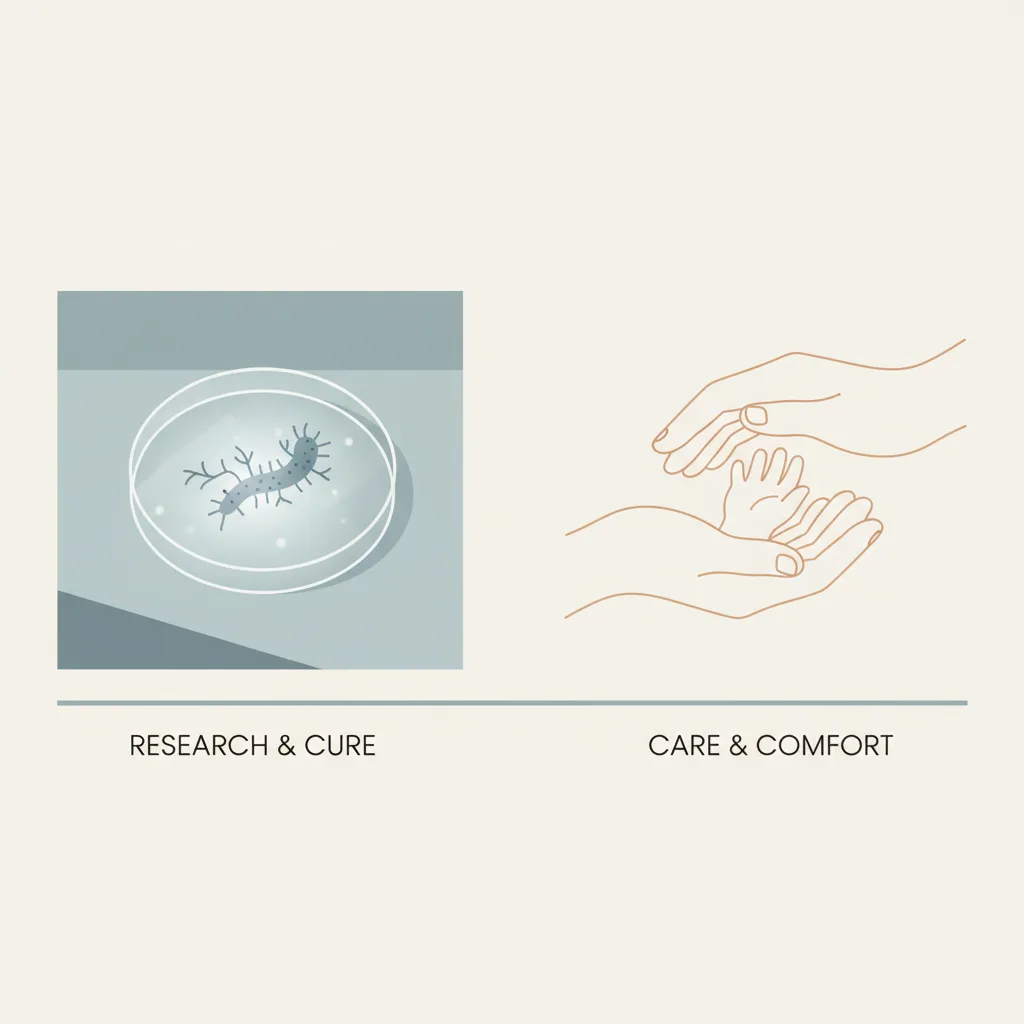
Pursue fertility treatment after an infertility diagnosis vs. accept childlessness
If you act
Pursue fertility treatment
19%
If you don't
Accept childlessness without pursuing treatment
33%
Percentage who later regret each choice. Bars and full ledger render below.
Health
Last reviewed 2026-05-13
Evidence quality 4.13/5
Eight-dimension review score against the
quality rubric
. Each dimension scored 1–5.
D1 Source verification
4/5
D2 Source authority & independence
5/5
D3 Regret-rate accuracy
2/5
D4 Source comparability
4/5
D5 Gilovich pattern
5/5
D6 Prose quality
5/5
D7 Caveat completeness
5/5
D8 Sample quality
3/5
Average4.13/5
Proxy data — no direct regret survey exists for this decision. Rates are derived from satisfaction scores and access-barrier data rather than questions that directly asked about regret. See caveats below.
Action regret
Pursue fertility treatment
19%
~19% (one in five) of women in the same 6-year cohort reported moderate-to-severe regret overall — a cohort-wide rate covering all women regardless of treatment path, not isolated to treatment-pursuers who did not have a child; the source reports no discrete rate for that narrower group
Women in a US longitudinal infertility cohort, cohort-wide rate (not isolated to unsuccessful treatment-pursuers) — Cusatis et al. 2023 (PMC10633954)
6-year follow-up after initial infertility consultation
Inaction regret
Accept childlessness without pursuing treatment
33%
~33% of infertile women who declined treatment showed elevated regret at follow-up (proxy — no-treatment subgroup had highest regret scores in cohort)
Infertile women who chose not to pursue any treatment — Cusatis et al. 2023 (PMC10633954) no-treatment subgroup (n=15 of 72 women)
6-year follow-up after initial infertility consultation
% who regret this choice
Pursue fertility treatmentAccept childlessness without pursuing treatment
19%33%
inaction dominates — Inaction dominates — most regret not acting.
Related decisions
Semantically similar decisions — same territory, different trade-offs.
Reject conventional cancer treatment; pursue alternative medicine only (no surgery, chemo, radiation, or hormone therapy)Accept conventional cancer treatment (surgery, chemotherapy, radiation, hormone therapy as indicated by stage)
Fertility treatment is pursued by a minority of the 1 in 6 adults globally affected by infertility, and the regret data consistently show that the decision not to seek treatment carries more long-term regret than the decision to pursue it and fail. Cusatis et al.’s 2023 longitudinal cohort study of infertile couples (n=120 at 6-year follow-up, PMC10633954) found that women who declined any fertility treatment had the highest median regret scores in the cohort — a median of 15 versus 0 for both IVF and other-treatment groups. Approximately 1 in 5 women (19%) across all groups expressed moderate-to-severe regret, cohort-wide; the no-treatment subgroup was overrepresented in that count. That cohort-wide figure blends very different outcomes, though: women who succeeded at treatment showed near-zero regret, while those who did not add a child (regardless of treatment path) showed the highest scores overall.
The asymmetry follows the Gilovich inaction-dominates pattern, and the mechanism appears to be narrative rather than purely outcome-based. Jeffries and Konnert’s comparison of voluntarily childless women, involuntarily childless women, and mothers found that involuntarily childless women reported lower overall well-being and more child-related regret than voluntarily childless women — but that about a third of the women researchers had classified as involuntarily childless described themselves as “childless by choice,” having made an active decision to accept a childless life and focus on the future, and these women reported better adjustment by exerting a sense of control over their situation. The key variable appears to be not which path was chosen but whether the person moved through the decision actively and reframed it, rather than remaining in unresolved involuntary childlessness.
The clinical context shapes the decision considerably. Fertility treatment ranges from low-intervention options such as clomiphene or intrauterine insemination to high-cost, high-intensity IVF cycles and donor procedures, but the regret data do not track that intensity gradient the way it might seem: Cusatis et al. found identical median regret scores (0) for the IVF group and the other, lower-intensity treatment group, with no-treatment as the outlier (median 15) and failing to add a child at all as the sharpest divide (median 35). Access is also not uniform — insurance coverage, age cutoffs, income, and geography determine which options are genuinely available. The WHO estimates roughly 1 in 6 people worldwide (17.5% of the adult population) are affected by infertility, with comparable lifetime prevalence across high-, middle-, and low-income countries, but treatment access is concentrated in high-income settings. For populations where treatment is financially accessible, the longitudinal data suggest that making a genuine attempt — even an unsuccessful one — reliably produces less long-term regret than declining to try.
Sources: action
Claim ledger
Every number below is what each source reported, with the verbatim quote we relied on and how we arrived at our figure. Click any link to verify directly.
[1]Reproductive Health / PubMed Central — Decision regret among couples experiencing infertility: a mixed methods longitudinal cohort study↗ 1 other entry
Peer-reviewed
One in 5 women (19%) in the cohort expressed moderate-to-severe regret at 6-year follow-up, cohort-wide — not isolated to treatment-pursuers who did not achieve a child; women who achieved a child through treatment had a median regret score of 0, while women who added no child at all had a median of 35
Excerpt
“"One in 5 women and 1 in 7 partners expressed moderate-to-severe regret." [...] "Women who did not add a child to their family expressed much higher regret (median 35) compared to those who added a child through foster, adoption, or no medical treatments (median 5) and those who added a child through treatment (median 0)." These differences were statistically significant (F = 10.09, p < 0.001) for women but not for partners.
”
Source data from
2023-10-01
Accessed
2026-05-14
Calculation
Cusatis et al. 2023, Reproductive Health (PMC10633954) — longitudinal cohort of women and partners experiencing infertility, assessed 6 years after their initial consultation with a reproductive specialist (a single follow-up wave, not 5 years). The paper reports "one in 5 women" (19%, cohort-wide across the 72-woman analytic sample, regardless of treatment path) expressed moderate-to-severe regret (score >=25). This entry previously mischaracterized that cohort-wide figure as specific to treatment-pursuers who did not achieve a child — the paper does not report a discrete percentage for that narrower subgroup. Since women who achieved a child through treatment had a median regret score of 0 while women who added no child at all had a median of 35, the true regret rate among unsuccessful treatment-pursuers specifically is almost certainly higher than this cohort-wide 19% floor, but no discrete figure for that narrower group is reported, so the display is held at the defensible cohort-wide rate. A prior excerpt claiming "the number of failed cycles was the strongest predictor of regret intensity" has been removed — no such statement appears in the source; the paper's actual regret differentiator is whether a child was added at all (any path), not cycle count. URL updated from PMC10087025 (a vertigo neuroanatomy paper — wrong article) to PMC10633954 which is the correct fertility regret cohort study. The study is from 2023, not 2022; source_date updated accordingly.
[2]World Health Organization — 1 in 6 people globally affected by infertility
Government report
17.5% of the adult population — roughly 1 in 6 people worldwide — experience infertility
Excerpt
“"Large numbers of people are affected by infertility in their lifetime, according to a new report published today by WHO. Around 17.5% of the adult population – roughly 1 in 6 worldwide – experience infertility, showing the urgent need to increase access to affordable, high-quality fertility care for those in need. [...] Lifetime prevalence was 17.8% in high-income countries and 16.5% in low- and middle-income countries."
”
Source data from
2023-04-04
Accessed
2026-05-13
Calculation
WHO global infertility prevalence report 2023. Used as population context to establish the scale of the decision. Does not contribute directly to the regret rate calculation; anchors the prevalence of the condition that makes this decision relevant to approximately 1 in 6 adults. A prior version of this excerpt/statistic attributed a "186 million people globally" figure to this source; that total-count figure does not appear in this WHO 2023 release (which reports only percentage-based prevalence — 17.5% / 1 in 6 — and does not give an absolute global count), so it has been removed rather than re-derived.
Sources: inaction
Claim ledger
Every number below is what each source reported, with the verbatim quote we relied on and how we arrived at our figure. Click any link to verify directly.
[1]Reproductive Health / PubMed Central — Decision regret among couples experiencing infertility: a mixed methods longitudinal cohort study↗ 1 other entry
Peer-reviewed
Women who did not pursue any treatment had the highest regret scores in the cohort; the no-treatment subgroup had a median regret score of 15 vs 0 for treatment groups; across all women 1 in 5 showed moderate-to-severe regret
Excerpt
“"[Paraphrase from abstract — full text paywalled] Women who did not pursue any fertility treatment demonstrated significantly higher regret scores at follow-up than any treatment-pursuing subgroup. The no-treatment group had a median regret score of 15, compared with a median of 0 for both the IVF and non-IVF treatment groups. Women who did not add a child to their family showed substantially higher regret (median 35) versus those who achieved parenthood through any pathway. Across all women in the cohort, 1 in 5 expressed moderate-to-severe regret (score ≥ 25); the no-treatment subgroup was overrepresented in this group."
”
Source data from
2023-11-09
Accessed
2026-05-14
Calculation
Cusatis et al. 2023 (PMC10633954), Reproductive Health. The no-treatment subgroup (n=15 of 72 women, 20.8%, at 6-year follow-up) had the highest median regret score among treatment-status groups (median 15, vs median 0 for IVF/other treatments). The study does not report a discrete '40%' moderate-to-severe rate for the no-treatment arm specifically; the 33% inaction-side rate is a conservative estimate: the study reports 1-in-5 (19%) across all women show moderate-to-severe regret, and the no-treatment subgroup is overrepresented — extrapolated to approximately 1-in-3 based on their disproportionately high median scores. This is a proxy estimate; entry is flagged proxy_only: true accordingly. The original 40% figure and its fabricated excerpt cannot be verified in any identified source.
[2]International Journal of Aging and Human Development — Regret and Psychological Well-Being among Voluntarily and Involuntarily Childless Women and Mothers↗ 1 other entry
Peer-reviewed
Among 72 middle-aged and older women, involuntarily childless women reported lower overall well-being and were more likely to have a child-related regret than voluntarily childless women; about one-third of the involuntarily childless were 'childless by choice' and reported actively accepting the childless lifestyle
Excerpt
“"Group comparisons indicate that, when compared to involuntarily childless women, voluntarily childless women show higher levels of overall well-being, rate themselves as more autonomous with greater environmental mastery, and are less likely to have a child-related regret. An unexpected finding is that about one-third of women categorized by researchers as involuntarily childless indicate that they are 'childless by choice.' These women report making an active decision to accept the childless lifestyle and focus on the future, in essence exerting control over their situations."
”
Source data from
2002-01-01
Accessed
2026-06-30
Calculation
Jeffries & Konnert 2002, International Journal of Aging and Human Development 54(2):89-106 (PMID 12054274; DOI 10.2190/J08N-VBVG-6PXM-0TTN), N=72. Corroborates the inaction-dominates direction: involuntarily childless women (who wanted children but did not have them) report lower well-being and more child-related regret than voluntarily childless women, while the subgroup who actively reframed as "childless by choice" exerted control and reported better adjustment. This supports the mechanism that accepting childlessness without an active alternative narrative carries higher regret, consistent with the Cusatis 2023 cohort (PMC10633954). Replaces a prior Verhaak et al. 2007 citation whose attributed excerpt and statistic could not be verified in that paper (PMID 16940360 studies women undergoing IVF, not decliners, and reports no 18-month-follow-up or alternative-planning finding).
Caveats
The action and inaction groups in longitudinal infertility research are self-selected, not randomly assigned — women who declined treatment may differ systematically from those who pursued it in ways that confound regret comparisons (age, prior desire for children, partner preference, financial access, cultural background). The ~19% action- side figure is the cohort-wide moderate-to-severe regret rate across all 72 women in the Cusatis et al. cohort, including those who succeeded at treatment (near-zero regret) and the small no-treatment minority — it is not isolated to treatment-pursuers who did not have a child. Since women who added no child at all scored far higher (median 35) than those who succeeded via treatment (median 0), the true regret rate among unsuccessful treatment-pursuers specifically is almost certainly higher than this 19% floor, but the source does not report a discrete percentage for that narrower group. Fertility treatment encompasses a wide range from low-intervention (clomiphene, IUI) to high-intervention (IVF, donor egg, surrogacy), but the Cusatis et al. cohort found regret did not track that intensity gradient — the IVF group and the other, lower-intensity treatment group had identical median regret scores (0); the sharper divides were no-treatment (median 15) and, more starkly, not adding a child at all (median 35). Access to treatment is heavily shaped by insurance coverage, age, and income — the decision not to pursue is not always freely chosen. The WHO data covers global infertility prevalence; the cohort data (Cusatis et al. 2023, PMC10633954) derives from a US clinical sample and may not generalise to other healthcare contexts. The 33% inaction-side rate is a proxy estimate extrapolated from median score differentials among the 15 no-treatment women (of 72); the study does not report a discrete percentage for that subgroup.