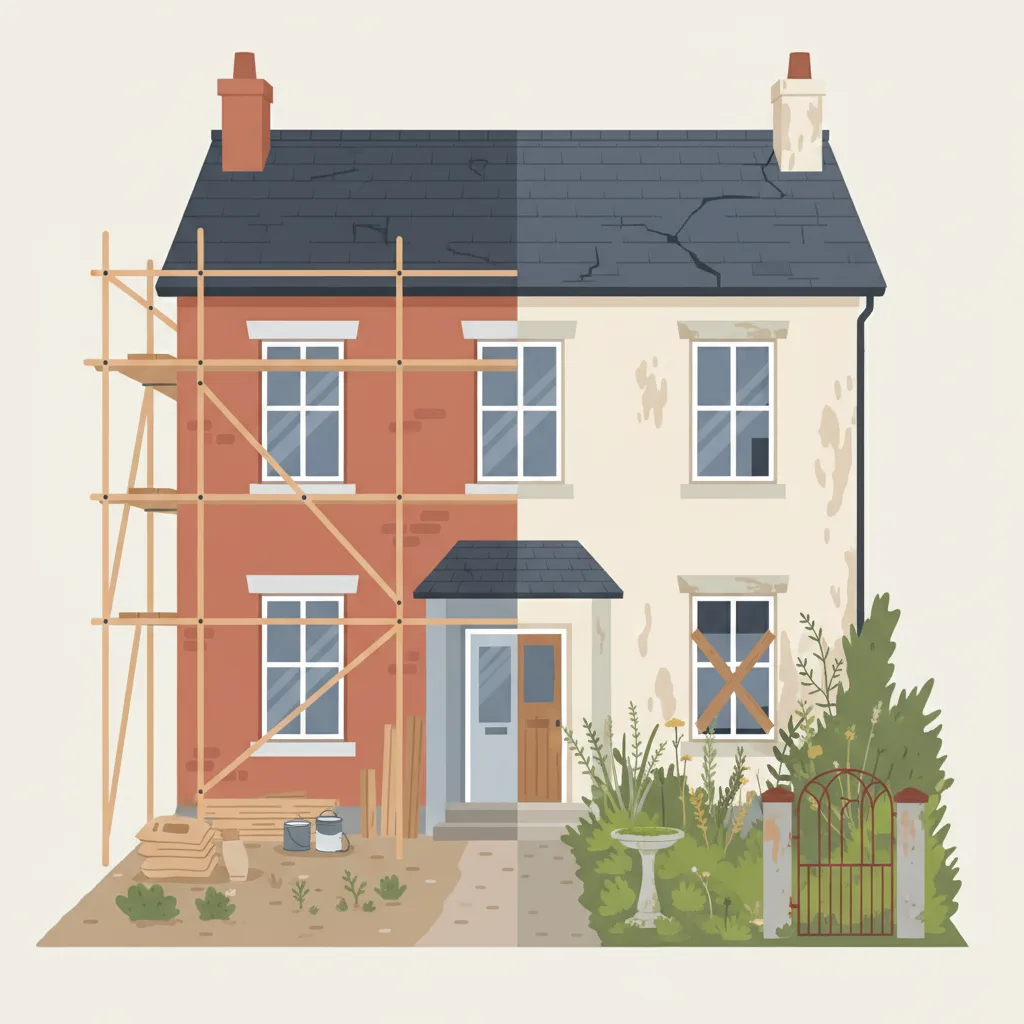





Three out of four homeowners who renovate end up regretting it, according to a 2024 Clever Real Estate survey of 1,000 US homeowners. The regrets span cost overruns (78% exceeded their budget), timeline failures (22% said it took too long), and a remarkable aesthetic backlash: 47% said they preferred their home before the remodel. Nearly two-thirds went into debt to fund the work. A separate Moneywise survey of 1,002 homeowners independently confirmed high renovation distress, with 63% reporting feeling overwhelmed. On the inaction side, Hippo Insurance found that 32% of homeowners regret delaying routine maintenance and necessary repairs — a meaningful minority, but less than half the renovation-regret rate.
The pattern is unusual. Most regret research, following Gilovich and Medvec’s foundational work, finds that inaction regret dominates over time: people eventually stop kicking themselves for what they did and start fixating on what they didn’t do. Home renovation breaks this pattern, almost certainly because the regret is financially concrete. More than a third of over-budget renovators exceeded their estimate by $10,000 or more, and 63% took on debt to finish the job — a debt load that does not soften into a wistful “what if” the way a missed vacation might. The debt persists, the kitchen still has the wrong tile, and the contractor never did come back to fix the grout. Angi’s 2024 State of Home Spending Report adds context: 43% of homeowners say stress from home repairs increased over the past year, and 54% struggle to find qualified professionals — suggesting that even those who want to act face barriers that compound dissatisfaction regardless of which path they choose.
The comparison is imperfect. Clever’s 74% captures anyone with any renovation complaint, from minor (“took too long”) to existential (“ruined my home”); a tighter question would yield a lower rate. Hippo’s 32% measures regret about delaying maintenance, not a deliberate philosophical decision to leave a home unchanged. Still, the directional signal is clear and independently corroborated: in the financial domain, acting rashly generates more regret than sitting tight — a useful corrective to the blanket advice that you should “just do it” with home projects.