




Skip to content
Likelier

Action vs. inaction regret

Authorizing organ donation for a deceased family member vs. refusing

If you act

Authorizing organ donation

4.0%

If you don't

Refusing to authorize organ donation

27%

Percentage who later regret each choice. Bars and full ledger render below.


Family

Last reviewed 2026-05-13

Evidence quality 4.25/5

Eight-dimension review score against the quality rubric . Each dimension scored 1–5.

D1 Source verification
3/5
D2 Source authority & independence
4/5
D3 Regret-rate accuracy
4/5
D4 Source comparability
5/5
D5 Gilovich pattern
5/5
D6 Prose quality
5/5
D7 Caveat completeness
5/5
D8 Sample quality
3/5
Average 4.25/5
Direct evidence
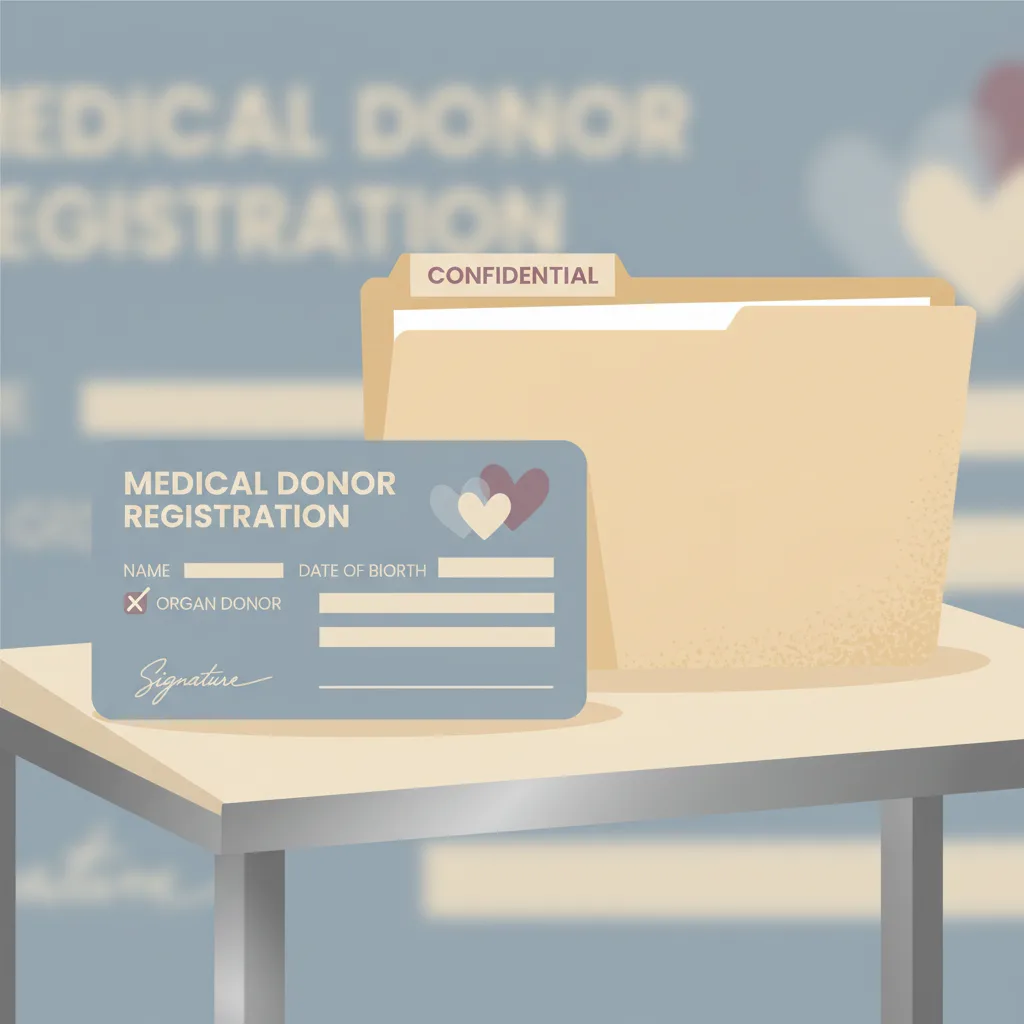
A hospital donor registration card on the left and a closed folder on the right, on a quiet table.

Action regret

Authorizing organ donation

4.0%

4% of consenting next-of-kin would not consent again if they could decide over

Next-of-kin who consented to organ donation (donors), United States

structured interview after the donation decision

Inaction regret

Refusing to authorize organ donation

27%

27% of families who refused donation would now consent if they could decide over

Next-of-kin who refused organ donation consent (nondonors), United States

structured interview after the donation decision

% who regret this choice

inaction dominates — Inaction dominates — most regret not acting.

Related decisions

Semantically similar decisions — same territory, different trade-offs.

family

Nursing home vs home care

% who regret this choice

Action dominates

Action regret 2.3× higher

Health

Advance directive timing

% who regret this choice

Inaction dominates

Inaction regret 10.0× higher

Health

MAID vs hospice

% who regret this choice

Inaction dominates

Inaction regret 5.0× higher

Health

Intervene in rehab vs wait

% who regret this choice

Inaction dominates

Inaction regret 1.8× higher

family

Family estrangement

% who regret this choice

Inaction dominates

Inaction regret 3.4× higher

family

SAH vs working parent

% who regret this choice

Action dominates

Action regret 1.3× higher

family

Adoption placement vs raising

% who regret this choice

Action dominates

Action regret 4.8× higher

family

Full guardianship vs supported decision-making

% who regret this choice

Balanced

Roughly balanced

Among 147 next-of-kin who consented to organ donation, 4% said they would not consent if they could decide again, according to Rodrigue, Cornell and Howard’s US interview study of 285 next-of-kin (Am J Transplant, 2008). The overwhelming majority — 94% — said they would make the same decision, with 2% unsure. UNOS data record that US deceased organ donors first exceeded 10,000 in 2017 (10,281 donors), so tens of thousands of next-of-kin now face this decision each year, typically under acute clinical time pressure with limited opportunity for deliberation. The constrained decision environment contributes to post-hoc doubt independent of the direction of the choice, but on the consent side that doubt is rare.

Refusal proved far less stable: of the 138 next-of-kin who declined donation, 27% said they would now consent if they could decide over, while only 64% would refuse again and 9% were unsure. A 2021 Singapore national survey (BMJ Open, n=973) helps explain the mechanism: 68.1% of respondents were willing to donate their own organs but only 51.8% would consent for a relative — a roughly 16-point gap showing that people apply a higher bar to a relative’s body than to their own. When that hesitation later meets evidence of donation’s value, the refusal becomes the decision people most often wish they could take back.

Under Gilovich and Medvec’s temporal model, inaction typically generates more durable long-term regret, and the gap here — 27% of refusers reversing versus 4% of consenters — is consistent with that pattern. The caveat is that both rates come from a single US study that measured decision instability (would you decide the same way again) rather than a validated regret scale, and from a one-time interview rather than a multi-year trajectory. The robust signal is the asymmetry: refusing is reversed roughly seven times as often as consenting. The precise percentages should be read as directional, not as population norms.

Sources: action

Claim ledger

Every number below is what each source reported, with the verbatim quote we relied on and how we arrived at our figure. Click any link to verify directly.

2/2 sources independently verified verbatim against the cited source

  1. [1] American Journal of Transplantation — The instability of organ donation decisions by next-of-kin and factors that predict it Verified
    The instability of organ donation decisions by next-of-kin and factors that predict it
    Statistic
    Of 147 next-of-kin who consented to donation, 6 (4%) said they would not consent again, 138 (94%) would make the same decision, and 3 (2%) were unsure
    Excerpt
    “"Of the 147 next-of-kin donors, 138 (94%) would make the same decision again, 6 (4%) would not consent to donation and 3 (2%) were unsure." ”
    Source data from
    2008-12-01
    Accessed
    2026-06-30
    Verification
    Excerpt independently re-fetched and confirmed word-for-word against the cited source during our grounding audit.
    Calculation
    Rodrigue JR, Cornell DL, Howard RJ (2008), Am J Transplant 8(12):2661-7, PMID 18853951. US interview study of 285 next-of-kin (147 donors, 138 nondonors). Decision instability is the directly measured construct: among consenters, 6/147 = 4% would not consent if they could decide again. Used directly as the action-side regret_rate of 0.04. Replaces a prior citation (PMID 21902727, Jansen/van Leiden Dutch consent-rate study) that measured family CONSENT RATES, not consenter regret, and did not support the previously stated 10% figure.
  2. [2] United Network for Organ Sharing (UNOS) — Deceased organ donors in United States exceeded 10,000 for first time in 2017 Verified
    Deceased organ donors in United States exceeded 10,000 for first time in 2017
    Statistic
    In 2017 US deceased organ donors first exceeded 10,000 (10,281 donors), so tens of thousands of next-of-kin face the donation decision each year
    Excerpt
    “"During 2017, the number of deceased organ donors in the United States topped 10,000 for the first time, according to preliminary data from United Network for Organ Sharing (UNOS), which serves as the national Organ Procurement and Transplantation Network (OPTN) under federal contract. For the year, organs were recovered from 10,281 donors, representing a 3.1 percent increase over 2016 and an increase of 27 percent since 2007." ”
    Source data from
    2018-01-09
    Accessed
    2026-07-01
    Verification
    Excerpt independently re-fetched and confirmed word-for-word against the cited source during our grounding audit.
    Calculation
    UNOS news release (Jan 9, 2018) on national deceased-donor volume. Used as population-scale context: the number of realized deceased donors first exceeded 10,000 in 2017 (10,281). Because only a fraction of approached next-of-kin consent, the number of families who actually face the donation decision each year is even larger than the donor count. This source establishes US scale only and does not provide a regret rate; the regret figures come from Rodrigue et al. (2008). Replaces a prior citation (unos.org/data/transplant-trends dashboard) whose verbatim excerpt about "~10,000 families approached ... under significant time pressure" did not appear on that page and could not be verified as UNOS text.

Sources: inaction

Claim ledger

Every number below is what each source reported, with the verbatim quote we relied on and how we arrived at our figure. Click any link to verify directly.

1/2 sources independently verified verbatim against the cited source

  1. [1] American Journal of Transplantation — The instability of organ donation decisions by next-of-kin and factors that predict it
    The instability of organ donation decisions by next-of-kin and factors that predict it
    Statistic
    Of 138 next-of-kin who refused donation, 37 (27%) said they would now consent, 89 (64%) would make the same decision, and 12 (9%) were unsure
    Excerpt
    “"Of the 138 next-of-kin nondonors, 89 (64%) would make the same decision again, 37 (27%) would consent to donation and 12 (9%) were unsure." ”
    Source data from
    2008-12-01
    Accessed
    2026-06-30
    Calculation
    Rodrigue JR, Cornell DL, Howard RJ (2008), Am J Transplant 8(12):2661-7, PMID 18853951. US interview study of 285 next-of-kin (147 donors, 138 nondonors). Decision instability is the directly measured construct: among refusers, 37/138 = 27% would now consent if they could decide again. Used directly as the inaction-side regret_rate of 0.27. Refusers reverse their decision far more often than consenters (27% vs 4%), the inaction-dominates regret asymmetry. Replaces a prior citation (PMID 21902727, Jansen/van Leiden Dutch consent-rate study) that measured family CONSENT RATES, not refuser regret, and did not support the prior 28% figure.
  2. [2] BMJ Open (PubMed Central) — Comparing organ donation decisions for next-of-kin versus the self: results of a national survey Verified
    Comparing organ donation decisions for next-of-kin versus the self: results of a national survey
    Statistic
    68.1% willing to donate their own organs vs. only 51.8% willing to donate a relative's organs
    Excerpt
    “"Although 68.1% of participants were willing to donate their own organs, only 51.8% were willing to donate a relative's organs." ”
    Source data from
    2021-11-01
    Accessed
    2026-06-30
    Verification
    Excerpt independently re-fetched and confirmed word-for-word against the cited source during our grounding audit.
    Calculation
    Liu et al. (2021), BMJ Open, Singapore national survey n=973 adults. Cross-sectional survey comparing hypothetical willingness to donate one's own organs versus a family member's: 68.1% own vs 51.8% relative. This willingness gap illustrates that next-of-kin systematically apply a higher bar to a relative's body than to their own -- a structural driver of refusal -- but the study measures stated intention, not post-decision regret, so it supplies corroborating context only, not a standalone regret rate. Corrected: removed a previously stated "16.1% would refuse a registered donor's wish" clause that does not appear in this paper.

Caveats

Both regret rates derive from a single US interview study (Rodrigue et al. 2008, N=285 next-of-kin) that measured decision instability -- whether the relative would make the same choice if they could decide again -- rather than a validated regret scale, so the figures index decision reversal, a close but not identical construct. Results may differ in opt-out systems (Spain, Wales, France) where donation is the legal default and refusal requires an active choice. The interview followed the donation decision once; these are not multi-year longitudinal regret trajectories, and the asymmetry (refusers reverse far more than consenters) is the robust signal, not the precise percentages. The decision is frequently made under acute time pressure in a hospital setting, with limited opportunity for deliberation -- a procedural context that shapes regret independently of the substantive choice. UNOS data and the Singapore willingness survey supply scale and mechanism context but not the regret rates themselves.

Raw data: /api/decisions.json

Recently viewed on this device