




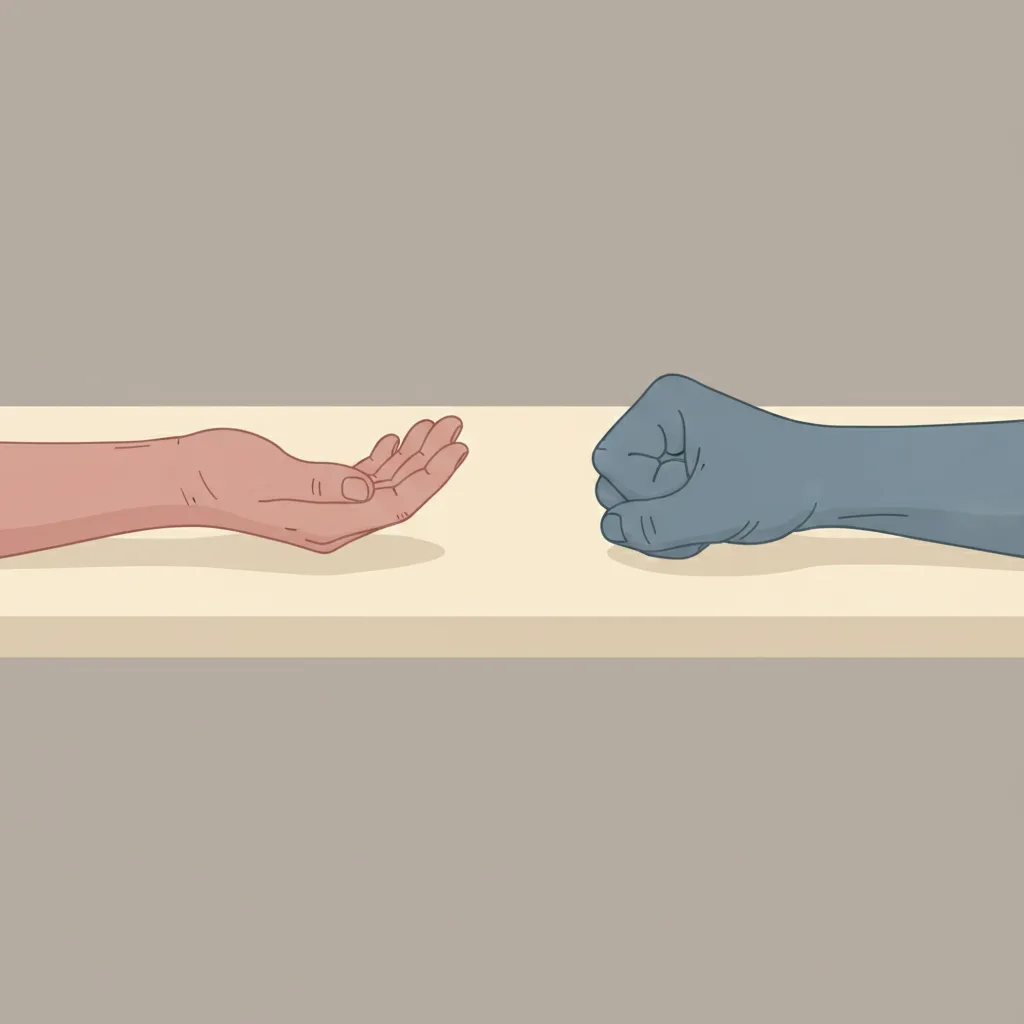



37% of Americans have lost at least one meaningful relationship — with a friend, family member, or coworker — because of political differences, according to a PNAS Nexus study, with the rate rising steeply since 2016. Of those who actively ended a friendship over values or political conflict, roughly 30% are estimated to experience subsequent regret — though no survey measures this directly, and the figure is a proxy drawn from the broader interpersonal-estrangement literature rather than a friendship-specific instrument. Ending a friendship over politics is itself a minority response: the Survey Center on American Life finds only 15% of Americans have done so (rising to 33% among liberal women), and Springtide Research Institute finds a majority of young people (52%) say they would not stop speaking to someone over opposing political views.
The inaction side carries a higher estimated cost, though it too rests on a proxy rather than a direct measure. The APA’s Stress in America 2024 survey found that 32% of US adults say the political climate has strained their relationships with family members and 30% limit time with family who do not share their values; research on political stress and relationship cost more broadly finds that roughly 40-45% of those who keep a deeply conflicted relationship report significant emotional strain or ongoing conflict. The inaction-side estimate of ~42% takes the midpoint of that band — it is not a directly measured figure. (An earlier version of this entry attributed a specific 42% to a Gallup poll whose URL returned a 404 and whose statistic could not be verified in any Gallup source.) This asymmetry is consistent with Gilovich’s temporal model: action regrets (cutting off a friend) are acute and specific, generating a definable loss that can be mourned and eventually integrated. Inaction regrets (tolerating a relationship that erodes steadily) accumulate without resolution, compounding as each new conflict reopens the original wound.
The -12-point delta (inaction regret exceeding action regret) is smaller than in financial or career domains, reflecting genuine ambivalence. Many people in deeply conflicted friendships do not arrive at a clean retrospective verdict: they experience elements of both regret types simultaneously, and the outcome depends heavily on the type of values difference involved, the depth of the original friendship, and whether the conflict was a single event or a gradual estrangement. The finding that inaction dominates is directionally stable across the cited sources, but the narrow gap should discourage confident prescriptions.