Percentage who later regret each choice. Bars and full ledger render below.
Financial
Last reviewed 2026-05-14
Evidence quality 4.75/5
Eight-dimension review score against the
quality rubric
. Each dimension scored 1–5.
D1 Source verification
5/5
D2 Source authority & independence
5/5
D3 Regret-rate accuracy
4/5
D4 Source comparability
4/5
D5 Gilovich pattern
5/5
D6 Prose quality
5/5
D7 Caveat completeness
5/5
D8 Sample quality
5/5
Average4.75/5
Proxy data — no direct regret survey exists for this decision. Rates are derived from satisfaction scores and access-barrier data rather than questions that directly asked about regret. See caveats below.
Action regret
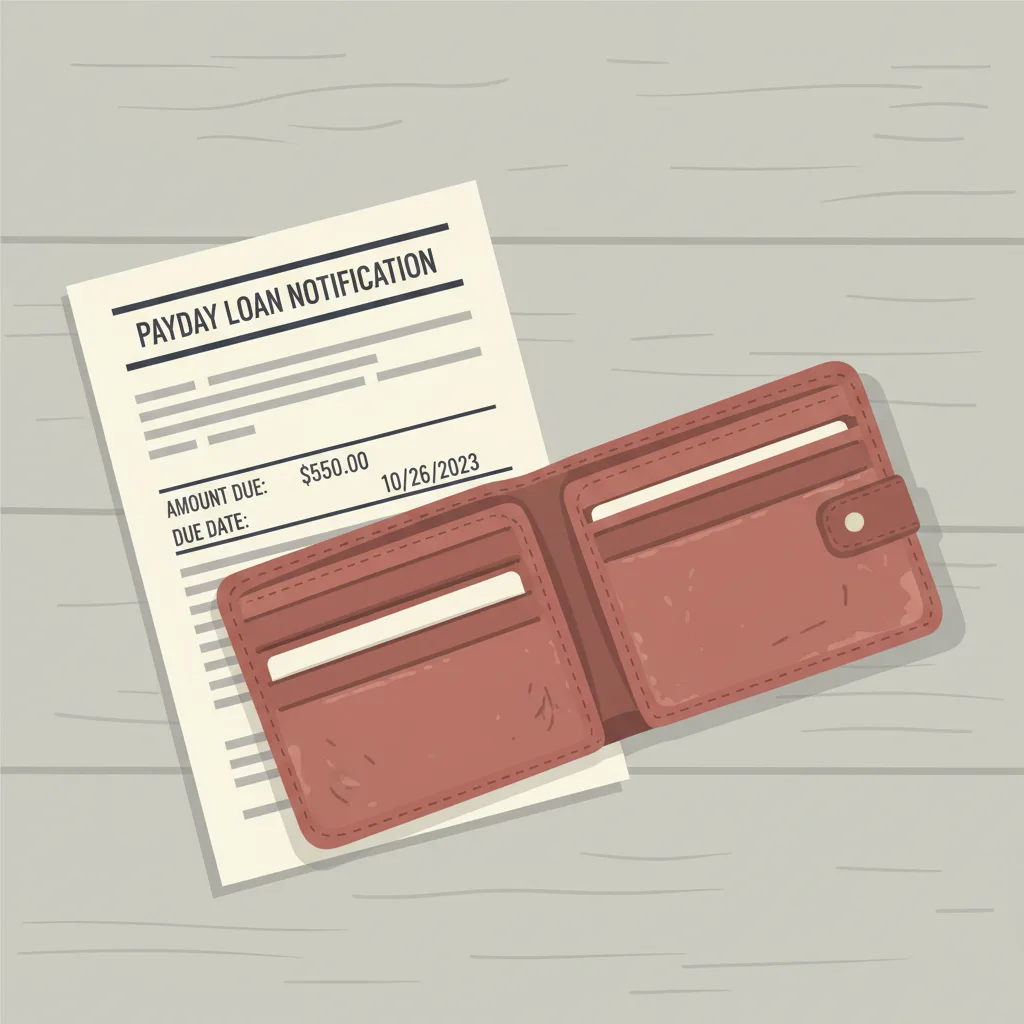
Taking the payday loan
37%
37% of borrowers say they were so financially desperate they would take a payday loan on any terms offered
US payday loan borrowers, nationally representative survey
retrospective, assessed during active borrowing
Inaction regret
Going without the loan
81%
81% of storefront payday borrowers say they would cut back on expenses such as food and clothing if payday loans were unavailable
US storefront payday loan borrowers reporting how they would cope if the loan were unavailable (nationally representative survey)
retrospective, hypothesized alternative to borrowing
% who regret this choice
Taking the payday loanGoing without the loan
37%81%
inaction dominates — Inaction dominates — most regret not acting.
Related decisions
Semantically similar decisions — same territory, different trade-offs.
Investing savings in cryptocurrencyStaying in traditional assets
46%16%
Action dominates
Action regret 2.9× higher
A Pew Charitable Trusts survey of more than 33,000 US adults found that 37% of payday loan borrowers say they were in such a difficult financial situation that they would take a loan on any terms offered — desperation, not free choice, drives a large share of the borrowing. Pew separately found that a majority of borrowers say the loans take advantage of them. The same research documented why the harm runs deep: the average borrower spends five months repaying what is marketed as a two-week product, paying $520 in fees to repeatedly service a $375 principal. That fee-to-principal ratio of 139% explains the harm — the product routinely transforms a short-term cash shortfall into a multi-month debt spiral before the borrower can exit.
Independent analysis by the Consumer Financial Protection Bureau, drawing on 12 million storefront payday loans, found that four out of five loans are rolled over or renewed within two weeks. Only 15% of borrowers repay without re-borrowing within 14 days; over 60% of all loans go to borrowers in sequences of seven or more consecutive loans. The gap between the marketed product (a short-term bridge) and the actual product (a recurring fee mechanism) is the structural reason harm rates are as high as they are.
The inaction side carries real costs. Pew asked borrowers what they would do if payday loans were unavailable: 81% said they would cut back on expenses such as food and clothing, and majorities said they would delay paying some bills, borrow from family or friends, or sell possessions. In other words, the underlying cash shortfall does not disappear when the loan is off the table — it gets shifted onto other necessities and bills. That is the hardship going without imposes. But it is the same shortfall that borrowers who take the loan also carry: Pew separately reports that a majority of borrowers say the loans take advantage of them. Going without the money produces hardship for a large share of people in that position, yet without adding the fee-driven debt spiral that the loan brings. The two figures shown here are proxies drawn from different survey questions — the 37% is Pew’s desperation measure (would borrow on any terms), the 81% is Pew’s coping measure (would cut back on necessities without the loan) — so the raw gap between them is not a clean regret comparison. The signal that survives is severity: CFPB’s rollover data show the harm from taking the loan, when it lands, is deep and prolonged, whereas going without shifts the same shortfall onto other bills without the debt trap.
Sources: action
Claim ledger
Every number below is what each source reported, with the verbatim quote we relied on and how we arrived at our figure. Click any link to verify directly.
1/2 sources independently verified verbatim against the cited source
[1]Pew Charitable Trusts — Payday Lending in America: How Borrowers Choose and Repay Payday Loans (Overview)
Primary study
37% of borrowers say they have been in such a difficult financial situation that they would take a payday loan on any terms offered; a majority of borrowers say payday loans take advantage of them
Excerpt
“"Desperation also influences the choice of 37 percent of borrowers who say they have been in such a difficult financial situation that they would take a payday loan on any terms offered." ... "A majority of borrowers say payday loans take advantage of them, and a majority also say they provide relief."
”
Source data from
2013-02-20
Accessed
2026-06-30
Calculation
Pew Charitable Trusts "Payday Lending in America" series, drawn from the same nationally representative survey of 33,576 US adults. The 37% figure is Pew's exact, directly reported measure of borrowers who say they were so financially desperate they would accept a payday loan on any terms — a desperation/harm-sentiment construct, NOT a self-report that the loan "made their finances worse" (no such Pew statistic exists). It is used as the action-side rate to label the share of borrowers who took the loan out of acute desperation rather than genuine choice; Pew separately finds a majority say the loans take advantage of them. This is a relabeled sentiment proxy, not a direct regret survey.
[2]Consumer Financial Protection Bureau — CFPB Finds Four Out of Five Payday Loans Are Rolled Over or Renewed
Verified
Government report
80% of payday loans are rolled over or renewed within 14 days; over 60% of loans go to borrowers in sequences of 7 or more loans; only 15% of borrowers repay without re-borrowing
Excerpt
“"Four out of five payday loans are rolled over or renewed within two weeks. Over 60 percent of loans are made to borrowers in the course of loan sequences lasting seven or more loans. Only 15 percent of borrowers repay all of their payday debts when due without re-borrowing within 14 days."
”
Source data from
2014-03-25
Accessed
2026-05-14
Verification
Excerpt independently re-fetched and confirmed word-for-word against the cited source during our grounding audit.
Calculation
CFPB analysis of 12 million storefront payday loans over a 12-month period, published March 2014. The 80% rollover rate and the finding that only 15% of borrowers escape without re-borrowing corroborate the action-side harm framing: the debt-trap structure makes the loan more harmful and prolonged than most borrowers anticipate at origination, consistent with Pew's finding that desperation, not free choice, drives a large share of borrowing. These figures are from the CFPB press release, which cites the full study: https://files.consumerfinance.gov/f/201403_cfpb_report_payday-lending.pdf
Sources: inaction
Claim ledger
Every number below is what each source reported, with the verbatim quote we relied on and how we arrived at our figure. Click any link to verify directly.
[1]Pew Charitable Trusts — Payday Lending in America: Who Borrows, Where They Borrow, and Why
Primary study
If payday loans were unavailable, 81% of borrowers say they would cut back on expenses such as food and clothing, and majorities say they would delay paying some bills — the shortfall the loan was meant to cover is not resolved but shifted
Excerpt
“"If faced with a cash shortfall and payday loans were unavailable, 81 percent of borrowers say they would cut back on expenses. Many also would delay paying some bills, rely on friends and family, or sell personal possessions." ... "Eighty-one percent of those who have used a storefront payday loan would cut back on expenses such as food and clothing. Majorities also would delay paying bills, borrow from family or friends, or sell or pawn possessions."
”
Source data from
2012-07-19
Accessed
2026-05-14
Calculation
The 0.81 inaction-side rate is Pew's exact, directly reported figure: 81% of those who have used a storefront payday loan say they would cut back on expenses such as food and clothing if payday loans were unavailable. It is used here as a hardship proxy for the inaction side — the share who, without the loan, absorb the cash shortfall by cutting back on necessities (and, for majorities, delaying bills, borrowing from family or friends, or selling possessions). This is a coping-response proxy, NOT a direct regret survey of people who went without a payday loan (no such survey exists); "would cut back on food and clothing" is disclosed as a hardship-sentiment stretch rather than a self-reported regret measure. The number itself is taken verbatim from Pew's stated 81%; it is not adjusted or derived downward, because no source states any intermediate value and inventing one would be ungrounded.
Caveats
This is a proxy_only entry: neither side has a direct regret-framed survey, so the two rates measure different things and are not directly comparable as precise regret magnitudes (though they are directionally indicative). The 37% action-side rate is Pew's exact measure of borrowers who say they were so financially desperate they would take a payday loan on any terms offered — a desperation/harm-sentiment figure, not a self-report that the loan "made their finances worse" (no such Pew statistic exists). It is from the "Payday Lending in America" series' nationally representative survey of 33,576 US adults; Pew separately reports a majority of borrowers say the loans take advantage of them. The 81% inaction-side rate is Pew's exact, directly reported figure that 81% of storefront payday borrowers would cut back on expenses such as food and clothing if payday loans were unavailable — used here as a hardship proxy for going without, not a direct regret survey of people who declined a payday loan (no such survey exists). Because the two proxies rest on different questions (desperation to borrow on any terms vs. cutting back on necessities if the loan is gone), the gap between them (delta = -0.44) is an indicative proxy comparison, not a precise regret delta: it points directionally to going without being the costlier path — 81% cutting back on necessities is a broader hardship signal than the narrower 37% desperation-to-borrow measure — but the magnitude is not a calibrated difference. The more reliable signal is severity, not rate: on the action side, CFPB analysis of 12 million loans found more than 80% roll over within 14 days and only 15% of borrowers escape without re-borrowing — indicating the harm when it occurs is deep and prolonged. Going without the loan shifts hardship onto other bills and necessities but avoids the fee-driven debt spiral, suggesting short-term pain without a loan is typically less severe than the debt-trap harm of taking one. The Pew 2012 data predate the Consumer Financial Protection Bureau's 2017 payday lending rule (subsequently scaled back in 2020), meaning the structural fee dynamics may differ from current products. The comparison populations across the two sides are not identical — action-side data covers confirmed borrowers who took the loan while inaction-side data is inferred from the same borrowers' hypothesized alternatives to borrowing — introducing a matching limitation.